
Many taxpayers assume that when the IRS contacts them, they have no choice but to comply without question.
But that’s not how the system works.
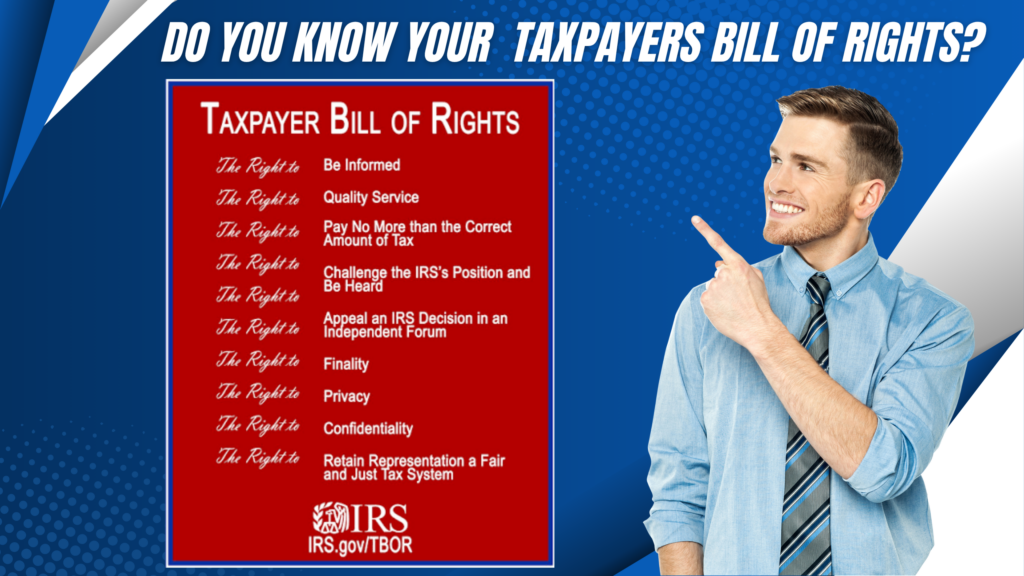
In fact, every taxpayer in the United States is protected by a set of fundamental rights known as the Taxpayer Bill of Rights (TBOR).
Whether you’re facing an IRS audit, responding to a tax notice, applying for tax relief, or resolving tax debt, understanding these rights can help you navigate the process with greater confidence and clarity.
The reality is that many taxpayers don’t know these protections exist and that lack of knowledge can lead to costly mistakes.
Let’s take a closer look at what the Taxpayer Bill of Rights is, why it matters, and how it can protect you when dealing with the IRS.
What Is the Taxpayer Bill of Rights?
The Taxpayer Bill of Rights is a set of ten fundamental rights that apply to all taxpayers when interacting with the Internal Revenue Service (IRS).
In 2014, Congress directed the IRS to formally adopt these rights to help taxpayers better understand the protections available to them under federal tax law.
The Taxpayer Bill of Rights serves as a reminder that taxpayers are not powerless when dealing with the IRS. Instead, they are entitled to fair treatment, clear information, and due process throughout the tax administration and collection process.
Why the Taxpayer Bill of Rights Matters
The IRS has significant authority to assess taxes, collect unpaid balances, and enforce tax laws.
However, that authority is balanced by taxpayer protections.
The Taxpayer Bill of Rights ensures that taxpayers have:
- Access to accurate information
- Opportunities to challenge IRS decisions
- Protection against unfair collection practices
- The ability to seek professional representation
- The right to privacy and confidentiality
Understanding these rights can help you make informed decisions and avoid feeling intimidated when dealing with IRS notices, audits, or collection actions.
The 10 Rights Included in the Taxpayer Bill of Rights
Let’s break down each of the ten rights and what they mean in practical terms.
1. The Right to Be Informed
Taxpayers have the right to know what they need to do to comply with tax laws.
This means the IRS must:
- Explain tax laws clearly
- Provide understandable notices
- Inform taxpayers about decisions affecting their accounts
- Explain why taxes, penalties, or interest are being assessed
If you receive an IRS notice, you have the right to understand exactly what the IRS is requesting and why.
2. The Right to Quality Service
The IRS is required to provide professional, prompt, and courteous assistance.
Taxpayers have the right to:
- Receive timely responses
- Be treated respectfully
- Speak with supervisors when necessary
- Receive clear communications
If you’re struggling to get answers, this right ensures that the IRS must make reasonable efforts to assist you.
3. The Right to Pay No More Than the Correct Amount of Tax
You are only required to pay the amount of tax legally owed.
This includes the right to:
- Claim deductions and credits you’re entitled to
- Challenge incorrect assessments
- Request refunds when appropriate
Many taxpayers overpay taxes simply because they don’t fully understand their available tax benefits.
4. The Right to Challenge the IRS’s Position and Be Heard
If you disagree with the IRS, you have the right to present documentation and evidence supporting your position.
The IRS must:
- Consider your objections
- Review supporting documents
- Respond appropriately to legitimate challenges
This right is particularly important during audits and collection disputes.
5. The Right to Appeal an IRS Decision
Taxpayers can challenge many IRS decisions through an independent appeals process.
You may appeal matters involving:
- Audits
- Penalties
- Collection actions
- Tax assessments
The IRS Office of Appeals operates independently from the division that made the original decision.
6. The Right to Finality
You have the right to know:
- How long you have to challenge an IRS decision
- How long the IRS has to audit or collect taxes
- When a tax matter is considered resolved
This prevents taxpayers from facing uncertainty indefinitely.
For example, the IRS generally has ten years to collect a tax debt after assessment.
7. The Right to Privacy
IRS enforcement actions must be no more intrusive than necessary.
This means the IRS must:
- Respect due process
- Follow legal procedures
- Avoid unnecessary invasions of privacy
While the IRS has collection authority, it cannot simply act without legal limitations.
8. The Right to Confidentiality
Taxpayer information is protected by law.
The IRS cannot disclose your personal tax information unless authorized by law or by you.
This protection helps safeguard sensitive financial and personal data.
9. The Right to Retain Representation
One of the most important rights taxpayers have is the right to professional representation.
You may choose to be represented by:
- Attorneys
- Certified Public Accountants (CPAs)
- Enrolled Agents (EAs)
- Authorized tax professionals
You do not have to face the IRS alone.
If representation creates financial hardship, you may also qualify for assistance through Low Income Taxpayer Clinics (LITCs).
10. The Right to a Fair and Just Tax System
The IRS must consider facts and circumstances that affect a taxpayer’s ability to comply.
This includes situations involving:
- Financial hardship
- Serious illness
- Natural disasters
- Economic difficulties
Programs such as:
- Currently Not Collectible (CNC) status
- Installment Agreements
- Offer in Compromise
exist partly because of this principle.
How the Taxpayer Bill of Rights Applies to Tax Debt Resolution
If you’re dealing with IRS tax debt, these rights become especially important.
For example:
Facing Collections?
You have the right to challenge collection actions and request alternatives.
Disagree With an IRS Assessment?
You have the right to present evidence and appeal.
Need Help?
You have the right to professional representation.
Experiencing Financial Hardship?
You have the right to request relief options designed for taxpayers in difficult situations.
Understanding these protections can dramatically improve the outcome of your case.
Common Misconceptions About Taxpayer Rights
Many taxpayers mistakenly believe:
“The IRS always has the final word.”
Not necessarily. Taxpayers have appeal rights and legal protections.
“I have to handle everything myself.”
You have the right to professional representation.
“The IRS can do whatever it wants.”
The IRS must follow established laws, procedures, and taxpayer protections.
“If I owe taxes, I lose my rights.”
Your rights remain intact regardless of how much you owe.
Why Knowing Your Rights Can Save You Money
Taxpayer rights aren’t just legal protections, they can also have real financial consequences.
Understanding your rights may help you:
- Avoid paying more tax than required
- Challenge incorrect penalties
- Secure payment arrangements
- Protect your income and assets
- Improve outcomes during audits and collections
In many cases, taxpayers lose opportunities simply because they don’t realize those opportunities exist.
How Titan Tax Solutions Helps Protect Taxpayer Rights
At Titan Tax Solutions, we believe informed taxpayers make better decisions.
Our team helps individuals and businesses:
- Understand IRS notices
- Respond to audits
- Request appeals
- Resolve tax debt
- Apply for hardship programs
- Negotiate with the IRS
Most importantly, we help ensure that your rights are protected throughout the process.
The Taxpayer Bill of Rights is more than just a government publication; it’s a powerful reminder that taxpayers have protections, options, and a voice when dealing with the IRS.
Whether you’re facing an audit, tax debt, penalties, or collection actions, understanding your rights can help you navigate the process with confidence.
Knowledge is one of the most valuable tools a taxpayer can have.
And when you know your rights, you’re in a much stronger position to protect your finances, your future, and your peace of mind.